Monday, December 11, 2006

Kateys Playground Vids

ARMANDO ROAD ROA and 5 poems of Dark Death Zarabanda


1
EN EL VIEJO
PHILLIPUS
tarnished in the mirror, rehearsing in silence
the narrow path, and words
when
reasons and do not burn your mouth.
Why?
Who?
barely a gasp.
the night like a river bends.
The wet knife scraping
moon darkness. Writing faceless
death.
The thick haze of blood. Saturated
hope,
Phillipus of Arimathea
emerges from a broken dream
without collapsing yet, as a funeral
acrobat
the more fragile the heart strings, and only
which vibrate to the bitter death rattle.
Man, according Phillipus,
is a nihilistic thought in the mind of God.


2
SIEGA each image. Language

Make your own gallows. Ascend
heavily its steps.
Be the executioner. Suddenly canceled the performance.


3
IN VAIN HE FOUGHT AGAINST TOUGH INSOMNIA

my death.
Life is a shadow assembly
who immolate themselves to each other.


4 Which of all my loves
I will have to bribe to death?
Meat
plot and plots from the depths: phlegm,
the crowded clump of fat,
the fury of dust back to dust.
Which of all my rust
am I to oxidize the scythe?


5
faceless VA REMAINING MEMBERS.
The hills of my body is cold.
My faltering voice sinks in the swamp
heart of God.


SELECTION, COMMENTS AND NOTES
By Leo Lobos - Francisco Vejar


poem editing Note 1: "Man of the technological age is par excellence a makeup artist's death. His efforts to disguise it unfold even before the death itself, in seeking to delay the signs of irreversible physical decline than advertised. So my sarabande is a dance of death according to the old tradition of morality plays of Juan de Pedraza Segovia and the Escorial manuscripts anonymous, a bet against the game provocative distraction of an era that has been sought by all means numb the horror before the expiration of the human condition. "He says Armando Roa Vial 4ta.Capa in his book of poems Zarabanda Dark Death , second edition revised and final. Printed and bound in Santiago de Chile in November 2006, with cover design by Sandra Accatino, Paulina Correa and review by the editor layout Edmundo Rojas and published under your imprint Beuvedráis Publishers.


poem editing Note 2: Armando Roa Vial (Santiago de Chile, 1966). His literary work includes fiction, essays, poetry and translation. In poetry published paper Man and Other Poems , The Apocalypse of the Word / The Mute said , Zarabanda Dark Death (2000, awarded the National Prize awarded by the Critics Circle Art), breaks to honor Gregory Samsa and Hotel Celine among others. He has translated poetry of Robert Browning selected, the early poetry of Ezra Pound, Shakespeare's Macbeth and also the ninth-century Anglo chose the Navigator. Test is also author of In Praise of Melancholy , the volume of stories To avoid dying so slowly and anthologies of Ezra Pound. Tribute from Chile , coauthored by Armando Uribe, and Chile's invention, coauthored with Jorge Teillier among others. The year 2002 was awarded the Pablo Neruda Prize .


poem editing Note 3: On his influences Armando Roa says: "The enumeration may be multiple. There are authors I have translated and who always come back, as Ezra Pound, Keats and Robert Browning Swimburne; certain provocative and stimulating as reading Dostoevsky, Hölderlin, San Augustine, Baudelaire, Nietzsche, Celan, Schopenhauer or Thomas Bernhard. And when is to turn to other non-verbal languages, perhaps because what we are looking beyond the narrow limits of the word, always appeal to the music, which seems to start where the word ends, giving way to superhuman dimensions, numinous, almost ineffable, and for that matter, overwhelming. Without going any further, in several of the poems of my text "Apocalypse of the Word / The Mute said," a rhythmic pattern test that tries to approximate the system of the series of twelve notes of the chromatic scale devised by the Austrian composer Anton Webern. "


poem editing Note 4: The itinerary of my writing - Armando says Roa Vial - has always been my reading log. I believe in literature "ecumenical" allusion, in the Cento joyful and pooled. In this game specular echoes, quotations and dialogues, the reader may recognize-than-explicit references to my various masks invited Zarabanda: Rene Char, Octavio Paz, Olga Orozco, Helmut Swinburne, Alfred Tennyson, GM Hopkins, Edward Cummings, TS Eliot, Charles Baudelaire, Jose Angel Valente, Juan Luis Panero, Carlos Marzal, Gottfried Benn, Emil Cioran, Jorge Luis Borges and Cesar Vallejo.


poem editing Note 5: The Latin titles Sarcophaga Tenebris carnaria Ipneus and of Zarabanda Dark Death refer to the forensic medical classification of the developmental stages of the body in the process of decomposition. Pavana Lachrimae quartet is based in Los Angeles Negros , the American composer George Crumb. Phillipus of Arimathea is the reverse of Joseph of Arimathea, and Julius is a reply to Sordello Sordello of Mantua, immortalized by the poet Robert Browning.

Thursday, October 5, 2006

Ccie Salaries In Dubai

Hugo Mujica and 5 poems from silence


1


logged forest screams, but does not know


screaming like
marble angel on the grave of a child


2
stone bird in flight


like someone who robs hosts,
or
life be like a dead naked, covered in dirt


3
dressed for the banquet
and gave me my bones

peel off my clothes for the wedding

and me

coated in frost Greed am what price?

4


Sunset Solitude tree her naked back.
Then, imperceptibly, the weight it was
flexing alone, until it fit into life.

5
as the first true
newborn crying, or an angel

farewell smoke since last fire


duel me to give me light and extinguish it hurts:
both sides of the die cut


5 poems of Hugo Mujica

Selection and Leo Lobos
interview notes and notes
Francisco Vejar
poem editing Note 1: Hugo Mujica was born in Buenos Aires, Argentina in 1942. He studied Fine Arts, Philosophy, Philosophical Anthropology and Theology. This range of studies is reflected in the variation of his work covering both the philosophy, anthropology, fiction and mysticism and especially poetry. In the sixties psychedelic maelstrom lived in New York. He then spent seven years at the Trappist monastery at Gethsemane, where he had a thorough understanding of meditation and silence. At the age of forty he began publishing his early books, among which are: Grilled white (1983), responsorial (1986), written in a reflection (1987), open Night (1999) , Sed in (2001), almost in silence (2004). Also noteworthy books of essays: The first word (1995) and vacuum Poetics (2002). Selected poems belong to the book Hugo Mujica - Complete Poetry 1983-2004, edited by Seix Barral Biblioteca Breve his collection, published his poetry is collected and published in this volume in Argentina, Italy and Spain in 2005.

poem editing Note 2: The first collected work of Hugo Mujica can delve into a journey in which we illuminate the fundamental core of the human condition through an unusual and striking convergence of lyrical and metaphysical, poetic beauty and reflection. Asked Francisco Vejar, the interview with Hugo Mujica 2005 for the university magazine The Navigator: "as Heidegger thinks that poetry is the introduction of the self with the word? "Hugo Mujica replied:" Yes and no, like almost everything. What is difficult to answer this is that we can not naively assume that we speak the same thing when we say the same thing: I refer to "being." Well posed, as Heidegger, but that in Heidegger are endless pages of clarifications and effacement, gives the impression that being would be something that is already there, and poetry appears, appears as poetry, making voice. The self is not first be and then speaks: not even the talk: is it that "happens" and occurs in the poetic language, speech emerging in the word when it is still word when she says, before saying " about "something, when the word is still emerging, not appeared. I would say that being "is" poetry is poiesis ...".

poem editing Note 3: Hugo Mujica nude naked existence poetry itself, stripped of all ornament, all distractions. Bringing the language to its essence, manages to give voice to the essence of life itself. Belongs to the silent voice that makes listening to this work, "in the silence - the silence tells us" speech. " Francisco Vejar consulted, when asked : "What is happening today with poetry in Argentina?" Hugo Mujica answers: "The picture is complex: too many books of poetry and a few poets. I suppose it was all" today "rather than receive them tomorrow. It's hard to say, in poetry, as in everything, and there is no centralized hierarchy, before you knew who were" the "poets, and a second, a third rank. Now and there is no center, there are islands, aesthetic, to sects, cults of power. No doubt could be grouped, as almost everywhere in the everyday poetry and poetry of transcendence, without which the latter is necessarily a religious connotation. Ontic and ontological poetry poetry, a one here or there. I think the predominance is the poetry of everyday life, the weakness of this poem is to stick to being a mere description, almost an inventory of what already is, ontological poetry, metaphysics, or whatever, is tempted to be tight, sometimes disembodied, talking without naming. Between these two dangers are poets, few clear that achieve this fusion. It is not really a matter of aesthetics, is whether it passes or fails, which it passes is called poetry, that it is not tied to any genre, even the poetic ...".

poem editing Note 4: "Mystery of transcendence, mysticism, where it is totally different reality itself released from its utility, when life returns to its poetry, he offers his nascent dimension, its free and trembling beauty . Naked beauty, quiet poetry, that is the achievement of these poems, poetry that embraces and celebrates this book, we transcribe the flap of the book of poems by Hugo Mujica - Complete Poetry 1983-2004 . To the query whether Francisco Vejar has published new draft replies, "Nothing, and always something. Books do not often arise, say, from cover to cover, according to a predetermined order, but rather lead a nomadic writing: I do sketches, notes, study subjects over time ... I feel that all this begins to talk to each other, begin to draw shapes, similarities ... then I realize I'm writing about this or that issue, there begins to give way, get to listen to this attraction. I think when these issues begin to relate, to win, it's because there was born a center that attracts him, that center is the book which is not yet. The self that wants to be. "

poem editing Note 5: " How do Chilean poetry?" Shoot Francisco Vejar, Hugo Mujica says, "Consider the stunning isolation that editions of poetry books in each country and the more than one country to another. For a book to arrive by the way "normal", ie commercial, almost necessarily the poet has to be a "set", ie, dead or on the verge of being so, and also "set" means, for that commercial distribution salable. Ie, a living with what happens in the creative bustle is lost, subtract the "market" and, perhaps, that is, Hegel said, "cunning" that something preserves its own being, subtracting, today, to be reduced to a commodity. Personally, and this I take to speak of gratitude, one of the poets who most influenced and fed me was Humberto Diaz Casanueva, and through him, Rosamel Valley. Humberto traveled to Buenos Aires to present my book Responsorial the prologue, was a great honor I received from him. " As we receive and honor to read and communicate at 5 Poems the poet Hugo Mujica.

5 poems - electronic journal
Co-edited by: Francisco Vejar - Leo Lobos
Santiago de Chile, October 2006.


can view and re-read page of the draft Heritage lyrics Solorza Luis Martínez (contact email: osol301 @ yahoo.es ).


Hugo Mujica 5 poems
www.letras.s5.com/ll171106.htm

Chilean page to servivio
culture
www.letras.s5.com

Monday, September 4, 2006

Scottish Sayings About People

ARMANDO URIBE and 5 poems


1

single death is chaos. Has anyone seen
chaos?
He has no legs and arms. Death
chair wheels.
Death, it's no
or lucky, and wheels, wheels.


2

They say final goodbyes. Why are you crying?
is I can not find the hours
died. And there is no case. Marcho

step by step behind the ladies
fatal. Why are you crying?
gods do not like me.


3 Deliver me, lazy and bored me out sparks
crab
round beast kill myself,
in this world who supports me?
In this world, in this nest
do not fit, death, in this cooker.


4
And how I would be dead, dead
in suit, with coping

and this pair of black eyes open.


5
most likely not be
nor that nor the other
neither this nor the one.
Goodbye, goodbye. How are things?
what I have.


Notes 5 poems of Armando Uribe Arce


By Francisco Vejar


poem editing Note 1: If we go back to the birth of poet Armando Uribe, 1950 is a year crucial. As the central character in the novel by Rainer Maria Rilke, The Notebooks of Malte Laurids Brigge discovers a poet in the midst of the crowd, this year, Roque Esteban Scarpa discovers Uribe in Chile. In "Poetry Armando Uribe Arce," published in The Mercury says: "do not always get the grace to contemplate the birth of a poet."


poem editing Note 2: To situate chronologically Armando Uribe say that belongs to the generation of 50 and that since his first poems, there is the germ of what will be one of the most educated and sarcastic of Chilean poetry. This promotion was created with the publication of the Anthology of Chilean new story (1954), by Enrique Lafourcade, who had the pen of noted poets such as Enrique Lihn and Alberto Rubio, but not with Uribe.


poem editing Note 3: His work has been able to introduce anecdotal, popular, discourse, social critique and the erotic, without leaving your personal world . In the course of his life, Armando Uribe has written books, articles and privately took notes on what he means by poetry and literature in general, including the novel.


poem editing Note 4: Armando Uribe says, "is translated also imitate, imitate and boys at the back of his victim. Unforgivable act and necessary, not for pleasure and profit of others, but for the development of who runs it and know well what you can do and what not. " One of the best books of the great American poet Robert Lowell called Imitation, hinting this type of work.


poem editing Note 5: Armando Uribe and a writer is a lawyer, political scientist, essayist and columnist on various topics, literary and quotas. He has served as a professor in the Departments of Public Law and Political Science from La Sorbonne in Paris and has served on committees in defense of human rights in Europe, for example, the Russell Tribunal II, along Julio Cortázar and Gabriel García Márquez.


Armando Uribe is an intellectual laconic judgments: "The poets are useless, they have no function. Poetry is useless, but when there is poetry, a very important part of the national soul disappears or fails to be. " Armando Uribe Arce is winner in 2004 with the National Prize for Literature.


loose Five poems belong to the book: broken images Armando Uribe, selection of texts, prefaces and notes Francisco Vejar. Editions published by Dolmen Santiago de Chile in 1998.
FRANCISCO literature

Friday, August 4, 2006

Cake Boss Butter Icing Recipie

ANDRÉS NEUMAN and 5 poems on science


1
(HEART)


There is a curve in mathematics other than that some
those who have never doubted,
called Koch curve. The change
perplexed
have preferred to call it like this: Snowflake.
It behaves this curve always fascinating
multiplying its size by four thirds
inward
coming in so thick, the infinite
without exceeding its tiny area.
Crafts,
very well so far inside you:
inhabiting slow, staying
yet without forcing it, this little heart
tight.


2 (EYE)

There are eyes that will see our memory.
Dr. Barraquer, old ophthalmologist, cruelty
met with the miracle
and realized how fragile the gift of sight:
the death of his father, who started in science,

could keep your eyes and restore the sight of several men.
will I be the glow of that love
beyond the star of the cornea and the well
astute pupil? Exploring the funds
baffled, bewildered
caves inhabited by the swift
images, shapes, colors
not yet have a name
and the dawn of life, Dr. Barraquer
found
corridor stretching from the earth heights,
of darkness broken the holy light.
And at the end of the afternoon when the sun is blind
among the embers of this world, Dr. Barraquer

absorbed recalls the words of the last patient
After removing the bandages from his face.
And the eye of his father, who is the moon,
reopened and whitens every shadow.


3
(ENERGY)

"With the pure reasoning
we form a sublime image of this world" so he wrote
Max Planck, innocent genius. But is there
reasons without affection, purity
without quirks,
image without shaking?
funny thing is that the physicist in his essay
the first word he utters is
evidence, law or fact :
the first word is enthusiasm.
(When your body named
not warp radiating muscles, blood
unruly and fast nerves
what I say, craft, although
physics
intervene in the way we have to talk in his ear
energy the name is transmitted
touch gaining strength and increases the probable.)
And you, Max Planck, who loved the entropy, what mysterious impulse
pulley
pushed you letters across a Mr. Sommerfeld and exchange
little poems like that
flower that crowns your book about science?


4 (The Tunnel)
What teachers say power: there are sleepers

particles capable of crossing a solid barrier,
force disintegrates like water!
Scientists deny classics.
These incredible preach and baptize
Tunneling.
Unleashing
soul does not want to respect Mr Newton postulated
invading borders. Crafts
in touch transit urgent


supporting this light weight and I will move my astonishment the other side of the barrier
taut skin, thinking

point that shines upon the mouth of the tunnel.


5
(BOTANY)

Paracelsus had a flower in each hand:
a bitter and concrete
taught him the exact mix that embellished
science textbooks. Improbable
, the other temple
tempted him more distracted by drawing

final pits where the compass is lost.
Its taste, I imagine, was sweet. Botany
secret, like Paracelsus

let me spy roots, stem
your
transparent to boil even a moment, then follow
growing uproar over land, the atmosphere pervading
bittersweet, crazy
each microscope.


(5 unpublished poems of Andrew Neuman)


Comments and notes by Leo Lobos


"Touched by grace. No good reader will perceive in its pages which is only possible to find in high literature, that poets who write true. The literature XXI century will belong to Neuman and a few of his kinsmen " (Roberto Bolaño, Unomásuno, Mexico).


poem editing Note 1: Andrés Neuman was born in Buenos Aires , Argentina in 1977, currently is based in Spain. 1991 moved to Granada, where he earned a degree in Philology. He has taught American literature and worked as a columnist and writer of comics in the daily Ideal de Granada. Since in 1995 is disclosed in the National Competition stories Alfaguara, has garnered a significant amount of awards and literary prizes both in the genre of poetry in the narrative and story. Some of the most important are the XVII Hyperion Poetry Prize for his book The slide, or Spring Prize novel, which was a finalist in 2002 with his novel Life on the windows. His poetry has been included in several anthologies of poetry and English young generation of 99 of José Luis García Martín ; Orfeo logic of Luis Antonio de Villena ; I is another . Autorretratos the new poetry of Jose Maria Rodriguez, or Twenty young English poets of the publisher Hyperion. In addition to his dedication as a writer, you have to highlight its work related to the short story as project coordinator little resistance, a tetralogy on the actual story written in Castilian , which is responsible for the Argentina. The most popular variation of the Koch curve is the "snowflake", which is not more than three curves that initially form an equilateral triangle. Its perimeter is, of course, infinite, but its area tends to 8 / 5 the value of the initial area.


copyright poem Note 2: In my opinion, science and literature have never been opposed. But, in contrast, are remarkably parallel in its objective (knowledge of the world) and complementary methods (the emotion of the rule in scientific thought, the rules of emotions in literary thought.) Anyone who has browsed a manual of modern physics, for example, will have ceased to be amazed by the thickness of metaphors, neologisms containing images and texts. As does the poetry, science and its various branches are taking advantage of surprise to get a sense and bring some order to the daily chaos. The law of gravity, by itself, has the simple and mysterious evidence that lives in pursuit of poetry with his eye: a red apple falls, someone manages to describe his instant flight and restart the story of the eternal human curiosity, excitement to see and do not fully understand what we see.


poem editing Note 3: Max Karl Ernst Ludwig Planck (April 23 of 1858 - October 4 of 1947) was a physical German regarded as the inventor of the quantum theory. Born in Kiel, Planck started his physics studies at the University of Munich in 1874, graduating in 1879 in the city of Berlin . He returned to Munich in 1880 to teach at the university and in 1885 moved to Kiel . He married Marie Merck in 1886 . In 1889, he returned to Berlin, where from 1892 was the director of the department of Theoretical Physics . In 1899, he discovered a fundamental constant, the so-called constant Planck, and is, for example, used to calculate the energy of a photon . That same year he described his own group of units of measurement based on fundamental physical constants. A year later he discovered the law of heat radiation, called Planck's Law , which explains the emission spectrum of a black body . This law became one of the foundations of quantum theory , which emerged ten years later with the collaboration of Albert Einstein and Niels Bohr .


poem editing Note 4: The tunneling is a quantum mechanical effect which is that a particle passes through a potential barrier without power enough to pass over (in the classic sense ), because the probability that the particle is on the other side of the barrier is not zero. Exploiting this effect, we designed the scanning tunneling microscope and scanning atomic force microscope, which achieve the determination of the atomic positions on a surface. On the other hand, tunneling is essential to explain the fact that the stars occurring hydrogen fusion temperatures, in theory, too low.


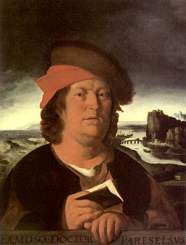
poem editing Note 5: Paracelsus (Theophrastus von Hohenheim Phillippus Aureolus Bombastus) was born in 1493 in Einsiedeln (Switzerland). His father was a doctor and think he instilled an interest in nature, especially those aspects related to the mineralogy, alchemy and, possibly, folk medicine. The family moved in 1502 to Villach in Carinthia. There might be in contact with the mine who studied The Fugger poseían.Parece in Ferrara where he had to have as teachers and Manardus Leoniceno, critical opponent of astrology. It is not clear who were to reach the degree of doctor, but some of the intermediate grades at that time were granted. However, experts say, was well aware of medical classics, but was unable to accept them uncritically. From very early on was a tireless traveler, visiting a variety of countries, including Scandinavia and the Middle East. It is known that around 1522, was having surgery.


In Santiago, Chile, August 2006.
FRANCISCO literature

Tuesday, July 4, 2006

English Paragraphs With Mistake

FRANCISCO Vejar and 5 poems on


1

ANNOTATIONS OF DAILY LIFE


Chet Baker


I started to listen to early eighties. We enjoyed those black moons revolving at 33 revolutions white nights by the flash of his melancholy voice, like our beer and snuff. The fine metal needle marked the day by dropping the leaves of the calendar, and we watched them grow, vague and lonely. We would not be us who would change the world, but usher in our own, composed of trees in a quiet park where we hid from the rough reality. At that time Time after time topics were heritage - and still are - the places that bautizábamos with the names of our lovers. I remember the death of Chet Baker. It was 1988, and were lying on a beach, far from the city then found out that his impression was torn version of My Funny Valentine, as he fell from an eighth floor in Amsterdam.


2


NOTES ON THE FACE OF A STAN GETZ DISC


Leaving the love like a plane crash

after wandering through lonely motels and beaches

where our footprints disappear after the tide;

days and days of swim

champagne and make love shouting waves. We

a rare species of animals who wrote sapphic


imperfect in their naked bodies.

So, we played to believe that the language dominábamos
dominábamos
as that moment. Today


treasure manuscripts jazz records, books and

flame that we would turn

as a layman who returns to his belief

and light the candles of a rusty chandelier. We left


love like a plane crash

without luggage or return tickets.


3


NOTHING MORE THAN THE TIME LOVE SOFT


Nothing but the mild weather of love;
concerns dissolved in
ocean and the silence of the sand on the beach.

touch and Matter breathing.
The damn rain that tries to erase our footprints.
some jazz music. Arena and flight.


4


VALDIVIA (Germain Arestizábal)


The 1 / 2 night, round about midnight-
James Dean goes on a Vespa and
Uma Thurman wields a Colt 38.
Someone says we're great and poetic
our nerve and open-necked shirts. Returning the river
,
home awaits us the unique singing of the birds, while Morgan
, like Pound, corrects
The old possum's book of cats by TS Eliot.
bells are heard a Catholic church and the market
river walk
Mapuche, Germans and locals.
There is a time to gather in the square
where all hope in love.


5
LEAK FOR BASS AND SAX


Walking, always walking
as he left for another part
with a backpack and plans illusions,
leaving the soldier muse
saliva dirty word.

We seem to her, the ink staining
papers, clutching something
farewell.
trying to disrupt the sense of the hours.
Maybe because nobody has gotten to know
and this is our triumph. Close

us, shut up and listen objects, pieces of moons
invented to seduce,
empty houses and no grass
in which we loved breaking locks.

Just as life, the party always somewhere else, perhaps in Edinburgh
, Valdivia Quintay or
but the flame is in our eyes

with us when we left

and forget that open pits
each day.


Notes on poems by Francisco Vejar
unpublished poem and translation of Roberto Piva

By Leo Lobos

poem editing Note 1: Chet Baker, one of the musicians determinants jazz history, lived a life of its own legend. How High The Moon hear Chet Baker read poetry of Octavio Paz, Gigia Talarico, Homero Carvalho, Vilma Tapia, Nicanor Parra and Jorge Teillier.

poem editing Note 2: saxophonist, Stan Getz, and said in his famous book: "Jazz, from the origins to our days," the renowned critic, Joachim E. Berendt, in the fifties about this musician: "... It is a virtuoso who can play as much as possible with a tenor sax." Emotional capacity to produce sound, suggestive ballads and creative and splendid in fast times, his art was influenced in the playing of Charlie Parker on one side - Bird's message struck a chord in Stan Getz, "and in relaxed and fluid ways of the saxophone of Lester Young. His childhood was developed in the New York borough of the Bronx where his parents emigrated from the Philadelphia home in 1931, just turned four years.

poem author Note 3: The poems included here were written between 1998 2004. The theme is part of a writing project that goes back to the publication of River (1988) and has continued to be written in books such as: listening to a personal album (1992), Continuity of the trip (1994), A poet flight ( 1996), Impossible Songs (1998) and Country Insomnia (2000). All with a common thread. Its constants are the landscape, the city, coast, jazz and death. The log of the ambush, is the sum of that search. In its pages we find allusions to the beach and its surroundings, but as a metaphysical space where life comes together well. In addition, there is some dialogue with authors from other latitudes. Note

editing poem 4: Germain Arestizábal Rebolledo, painter and draftsman. Born in Santiago on May 11, 1943. He spent his childhood in southern Chile in the city of Osorno. He studied architecture at the Catholic University of Valparaiso and Design at the University of Chile. His career has been marked by his adventurous spirit and bohemian that has guided trips and stays inside and outside Chile. He has worked as an illustrator for magazines Apsi, the newspaper La Epoca and various literary publications, also in a group of Salvadorans and Lilian Serpas Escobar Galindo. In works in conjunction with his friend the writer Jorge Teillier, achieved an interesting balance plastic and literary.


Note editing poem 5: The recent publication of O ambushed, poems by Francisco Vejar (Viña del Mar, Chile 1967) in the journal of literature and art COYOTE (No. 13, Londrina State of PR, Brazil. December 2005), translated by professor and poet-doctor Brazilian Cristiane Grando (Cerquilho, Brazil 1974), confirms what is said, although some circumstances preclude that a poet has the recognition it deserves. The truth of a poet, a true poet, has just finally making their way everywhere. No surprise when this publication is added to a long and persistent cultural activities list developed Francisco Vejar with enthusiasm, discipline and creativity admirable in the city of Santiago, including: the publication of poems translated by Cristina Sparagana in POETRY magazine. No 202 mensile internazionale di cultura poetica. Milan - Italy. February 2006, the correspondence with the Argentine poet Andrés Neuman and two paths publications in the prestigious Clarín: Review of new literature published in the city of Oviedo - Spain at No. 58 in August and September 2005, a selection of poems by Francisco between 2000 and 2005, and No. 60 Anniversary of the ten years of Clarín, with a magnificent essay in which he travels, featuring jazz, all the work of Nicanor Parra (Chillán, Chile 1914) entitled Nicanor Parra: The antipoet farmer. Participating in this way with the English writer and critic José Luis García Martín, giving the project through these magazines, a more diverse and plural of what is happening today in Latin American literature. In addition to his contributions to the newspaper El Mercurio, Chilean literature classes at the university, workshops, seminars and meetings of writers. A work in full production.

COYOTE remember that The Journal is edited by poet and journalist Ademir Assunção (Araraquara, SP, Brazil 1961) author of the books LSD Nô (poetry, 1994), A machine hairy (prose, 1997), Cinemitologias (Prose poetry, 1998) and Zona Branca (poetry, 2001). Outras anthologies integrated Praias / Other Shores - edição bilingual Portuguese / English (1998) and 12 (2000) among others, his co-editor is the poet Rodrigo Garcia Lopes (Londrina, Paraná, Brazil 1965) poet and translator of Walt Whitman Ezra Pound, Sylvia Plath, William Carlos Williams, Robert Creeley, Gertrude Stein, Laura Riding, Gary Snyder, Charles Bukowski, John Ashbery, Jim Morrison, Samuel Beckett and the XVI century anonymous poem The Seafarer - O sailor, among other texts.


Mention and suggest a visit to www.panoramadapalavra.com.br edited by the poet Helena Ortiz in the city of Rio de Janeiro and www.germinaliteratura.com.br where they have opened spaces for the dissemination of Latin American poetry in the great South American.


Finally we would like to quote a poem with explicit references to the Jazz by the Brazilian poet Roberto Piva. Roberto Piva was born on September 25, 1937 in São Paulo, Brazil. An unpublished poem of his book Saturn's Strange signs:

The Marquis de Sade
& la Marquesa de Santos
walk to the jazz of the sunsets
recalling some highlights
certain spasms
certain acts visionary
screaming his victories in the dark


In Santiago de Chile, a rainy July 2006.